Solutions
Solutions
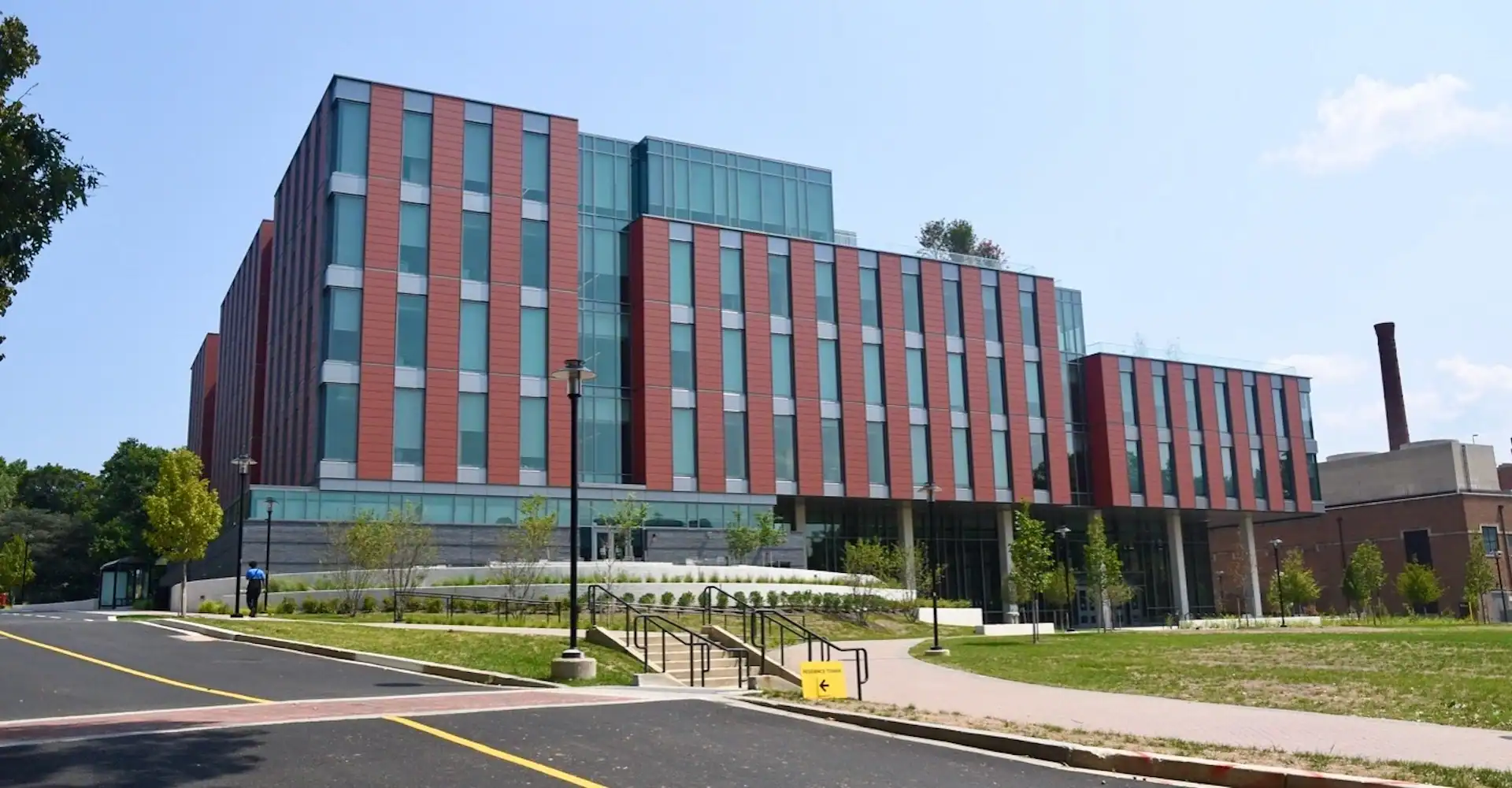
As AV consultant, designer, and systems integrator, Visual Sound helped bring DCCC’s new Southeast Center to life with instructional AV, culinary demonstration technology, digital signage, recording, and flexible production systems.
The Introduction
Technology-Enabled Learning for a New Generation of Students
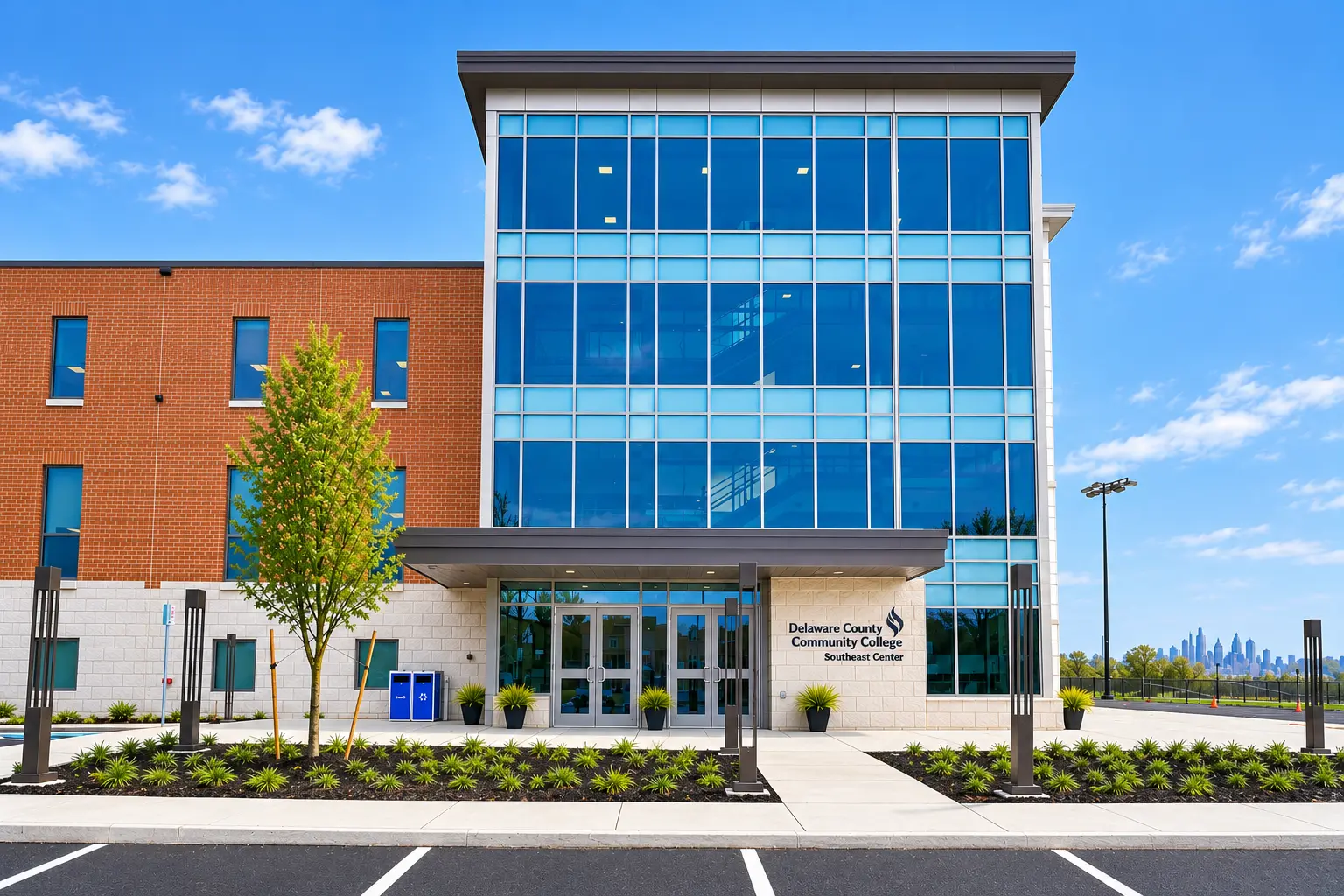
Delaware County Community College’s Southeast Center, designed by Marotta/Main Architects, transformed the former Archbishop Prendergast High School into a 118,000-square-foot modern education facility.
When Delaware County Community College transformed the former Archbishop Prendergast High School in Drexel Hill into its new Southeast Center, the goal was more than creating a new campus, it was creating a modern learning environment designed around the region’s evolving workforce needs.
Opened in 2026, the Southeast Center includes three centers supporting specialized career pathways, bringing together academic programs, workforce development, student services, and specialized career training in healthcare, biotechnology, skilled trades, culinary arts and hospitality, and early childhood education. The facility includes 28 general-purpose classrooms and computer labs along with seven specialty labs, including dedicated culinary arts kitchens.
Visual Sound engineering worked directly with DCCC IT and classroom support staff to design each space around the technology requirements of its specific classroom type. The team also coordinated infrastructure requirements with the architectural firm MAROTTA/MAIN to ensure the AV systems supported the goals and objectives of the facility and its educational spaces.
Visual Sound provided strategic AV consulting services, including technology planning and system design, technical scope-of-work development, equipment budgeting, project management, installation, systems integration, and commissioning of audio visual systems throughout the facility. The resulting technology environment was designed to support hands-on instruction, presentations, recording, distance learning, and flexible content sharing.
Learn More: https://www.dccc.edu/southeast/
The Project Scope At A Glance
-
Culinary Arts Teaching & Production Kitchens
- Theater-Style Culinary Demonstration Kitchen
- Hands-On Culinary Arts Lab with Individual Student Workstations
- Technology-Enabled General-Purpose Classrooms
- Public Speaking & Presentation Classroom
- Observation Rooms for Experiential Learning
- Digital Signage Throughout the Southeast Center
- Portable Video Production System
- Portable Audio Production System
- PTZ Cameras, Recording & Content Distribution
- Assisted Listening & Wireless Microphone Systems
- AV Control & Room Automation
The Challenge
One Center. Many Learning Environments.
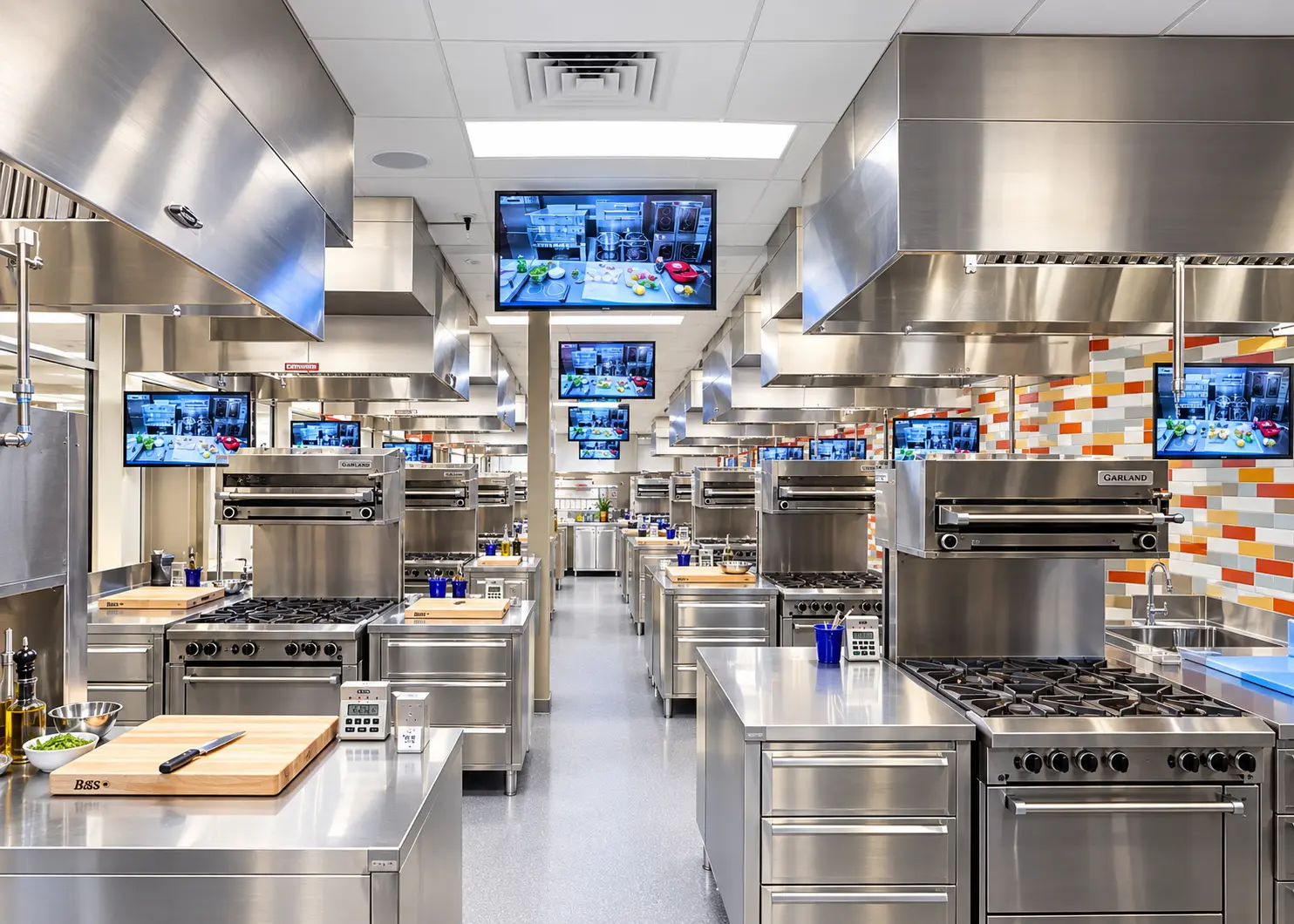
AV technology brings hands-on culinary instruction into clear view at DCCC’s Southeast Center in Drexel Hill. Multiple displays throughout the professional teaching kitchens give students a close-up view of demonstrations and techniques from every workstation.
Delaware County Community College’s new Southeast Center needed an AV environment capable of supporting a diverse mix of traditional classrooms, specialty learning spaces, observation rooms, digital signage, and hands-on programs, all within a single, connected facility.
The Culinary Arts program presented a particularly unique challenge: students needed clear, consistent views of cooking demonstrations from multiple locations, while instructors needed intuitive control over cameras, content, and displays. Visual Sound designed an integrated AV infrastructure that could support hands-on instruction, live demonstrations, observation, recording, collaboration, and content distribution while remaining simple and reliable for faculty and students.
The Solution & Spaces
Bringing the Culinary Arts Classroom to Life
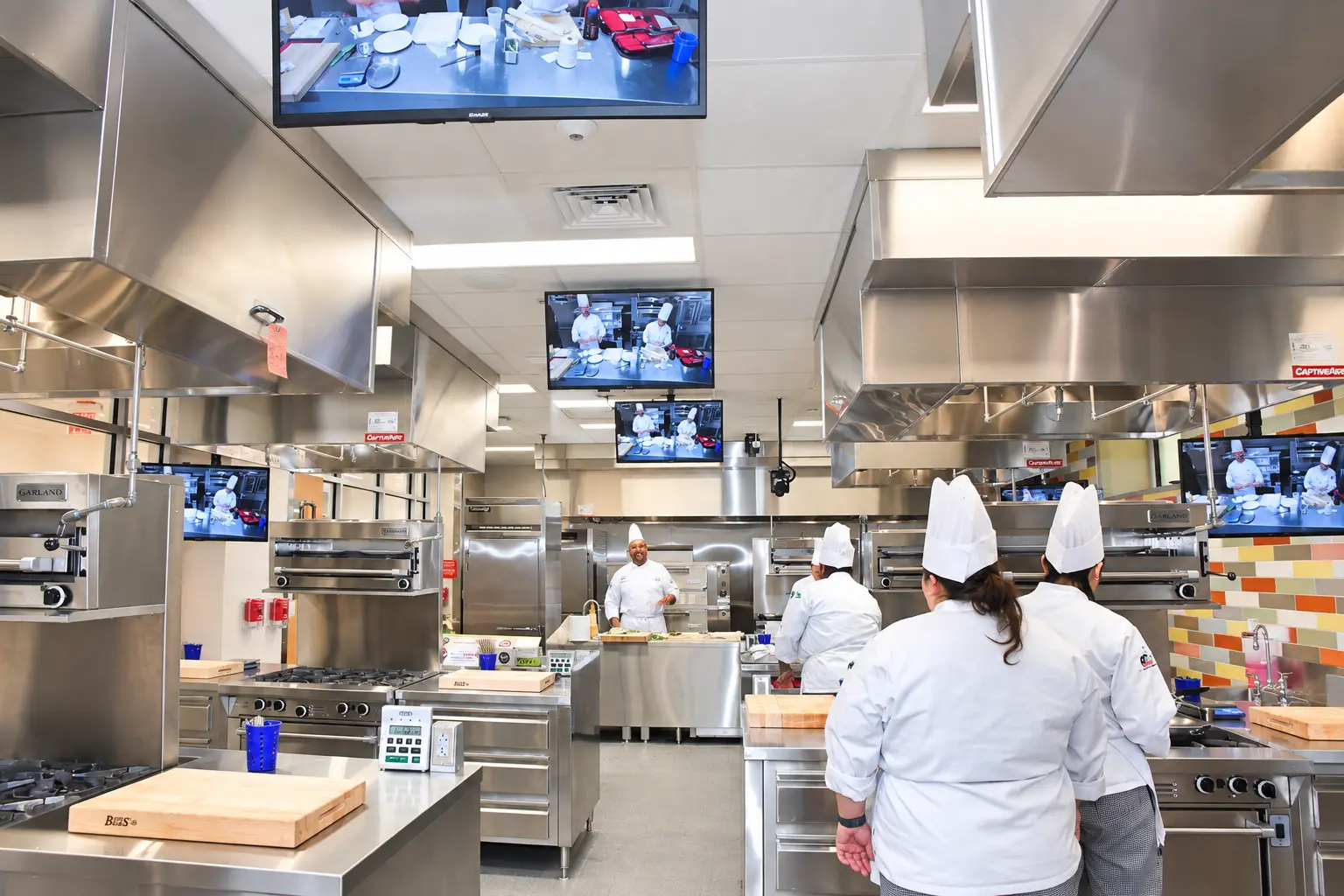
Through state-of the-art AV instruction technology, DCCC culinary students engage with instructors, sharpen their cooking skills, and ignite their future.
At the heart of the project is DCCC’s Center for Culinary Arts and Hospitality Studies, where AV technology plays an important role in connecting students with instructors and demonstrating professional culinary techniques.
The Culinary Arts Lab was designed around 16 individual student workstations, each equipped with its own 32-inch monitor. Three PTZ cameras capture instruction from key locations, including the stovetop cooking area, instructor preparation area, and instructor position—allowing students to view demonstrations directly from their workstations. A 6×1 HDMI switcher enables instructors to select the appropriate camera, while distribution amplifiers send the selected feed to student displays and a recording system.
The system is controlled through a 10-inch touchscreen control interface, giving instructors access to camera selection, PTZ controls and presets, recording functions, source selection, and audio controls. A mirrored iPad interface provides an additional way to control the system.
This technology transforms the traditional culinary demonstration model. Instead of students gathering around a single demonstration area, instructors can demonstrate techniques while students follow along on individual displays, creating a more consistent and engaging learning experience.
A Theater-Style Demonstration KitchenAV Designed for Hands-On Learning
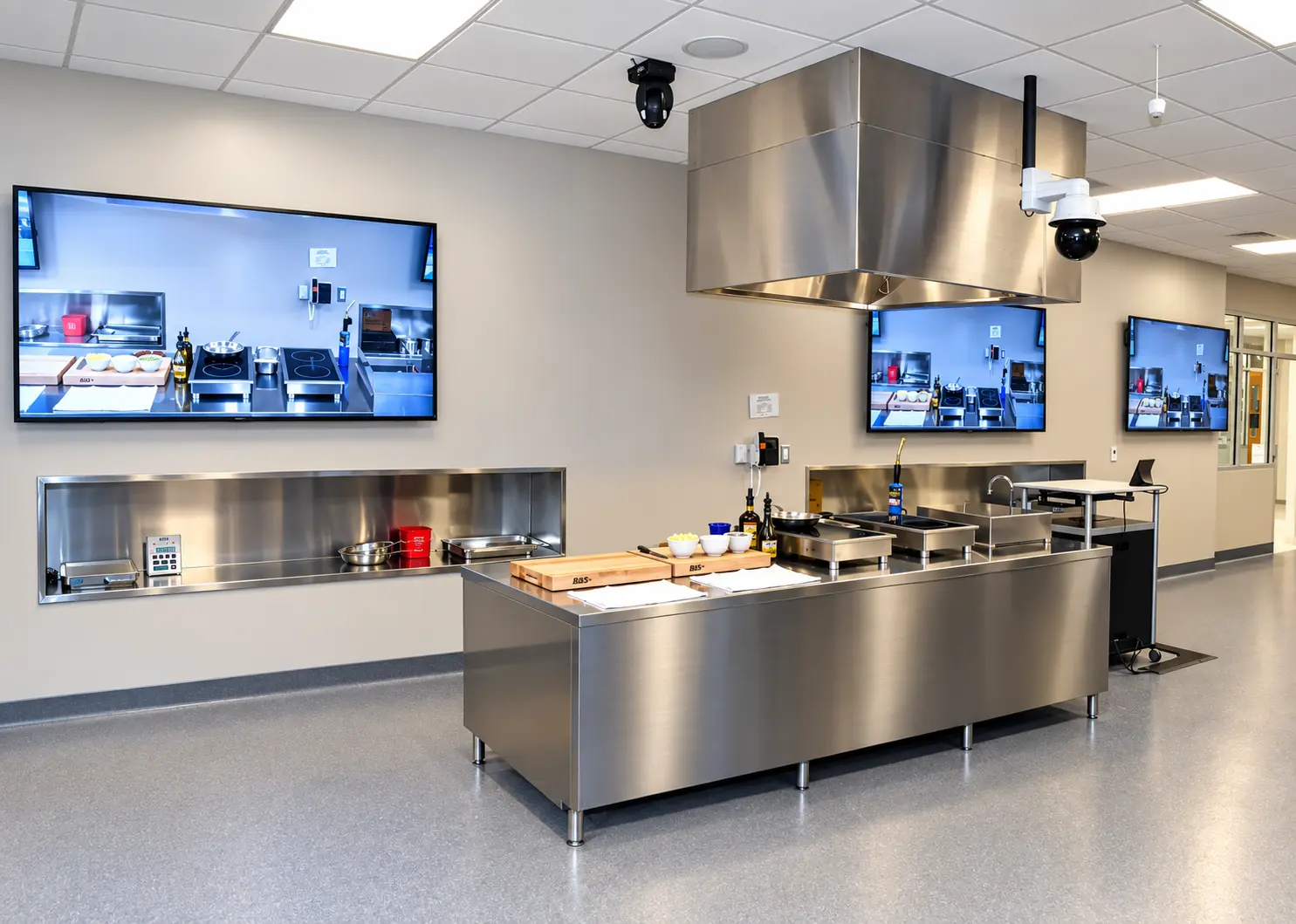
AV including PTZ cameras, large format displays, and a RoomCast production system captures instruction across multiple prep areas in the Southeast Center’s theater-style demonstration kitchen.
The space features four 75-inch displays plus a 65-inch supplemental display, providing clear views of presentation and instructional content throughout the room. A PTZ camera captures the instructor’s preparation area, while a DataVideo RoomCast production system incorporates three cameras positioned to capture the stove, prep area, and front-facing instructor view.
This creates a flexible instructional environment where culinary demonstrations can be viewed by students throughout the room and captured for future use.
DCCC describes the Culinary Arts spaces as professional teaching kitchens, culinary production areas, restaurant and event spaces, and classrooms designed specifically for hands-on culinary and hospitality education.
AV Designed for Hands-On Learning
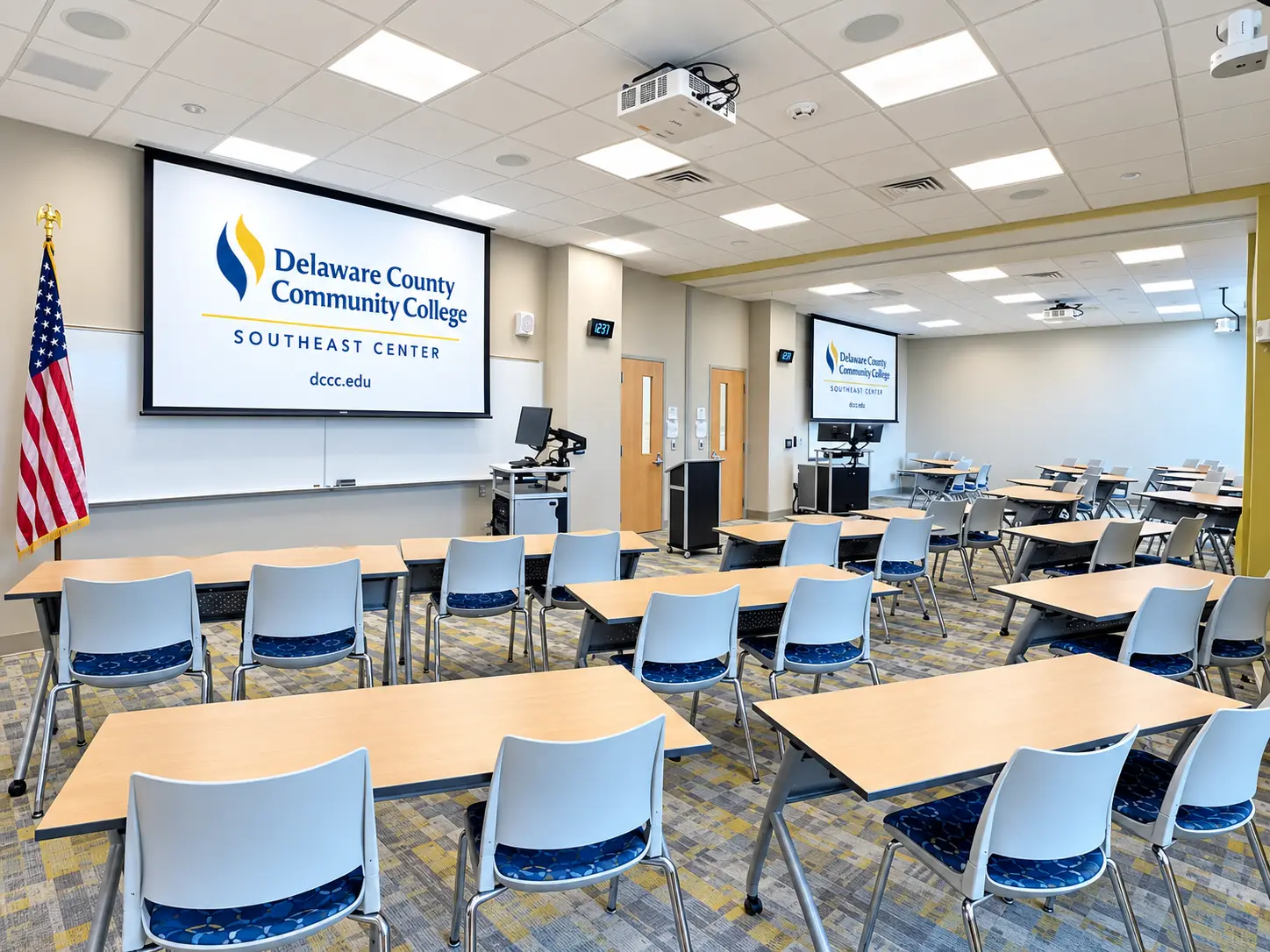
This divisible classroom features integrated AV technology designed to support flexible teaching, presentation, and collaboration across multiple learning configurations.
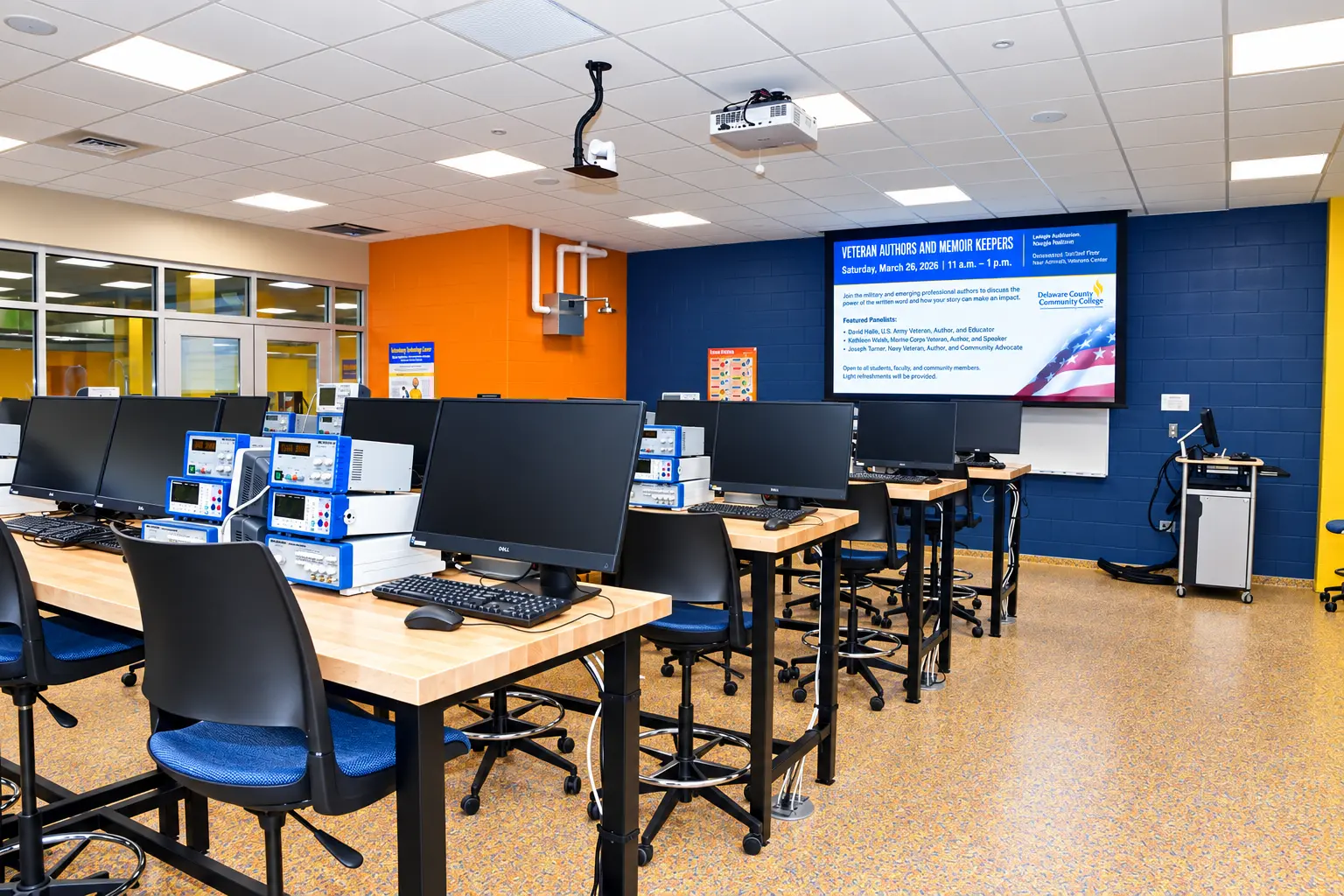
Modern classroom AV is designed for simple operations and geared to the specific teaching and learning requirements.
Beyond the culinary program, Visual Sound equipped classrooms throughout the Southeast Center with technology designed around different teaching and learning requirements.
Classroom AV systems incorporate a combination of projection, displays, cameras, microphones, speakers, presentation connectivity, and simple control interfaces. For example, a public speaking classroom includes a 6,200-lumen WUXGA laser projector, a 113-inch projection screen, presenter-tracking PTZ camera, HDMI connectivity, wireless presentation support, and microphone systems for presentation, conferencing, and recording.
Other classrooms feature conferencing hubs with ceiling microphone arrays, recessed ceiling speakers, amplifiers, and keypad control for simple operation. Controls can include system power, source selection, and volume, giving faculty a straightforward interface without requiring technical expertise.
Supporting Observation and Experiential Learning
AV technology also supports specialized observation spaces within the Center.
Observation rooms incorporate ceiling-mounted microphones, microphone mixers, headphone distribution amplifiers, and individual headphones, allowing students or faculty to listen to classroom activity without disrupting instruction.
These systems support DCCC’s broader emphasis on experiential education and specialized career preparation, extending AV beyond presentation technology into tools that facilitate observation, assessment, and hands-on learning.
Extending the Classroom Beyond the Room
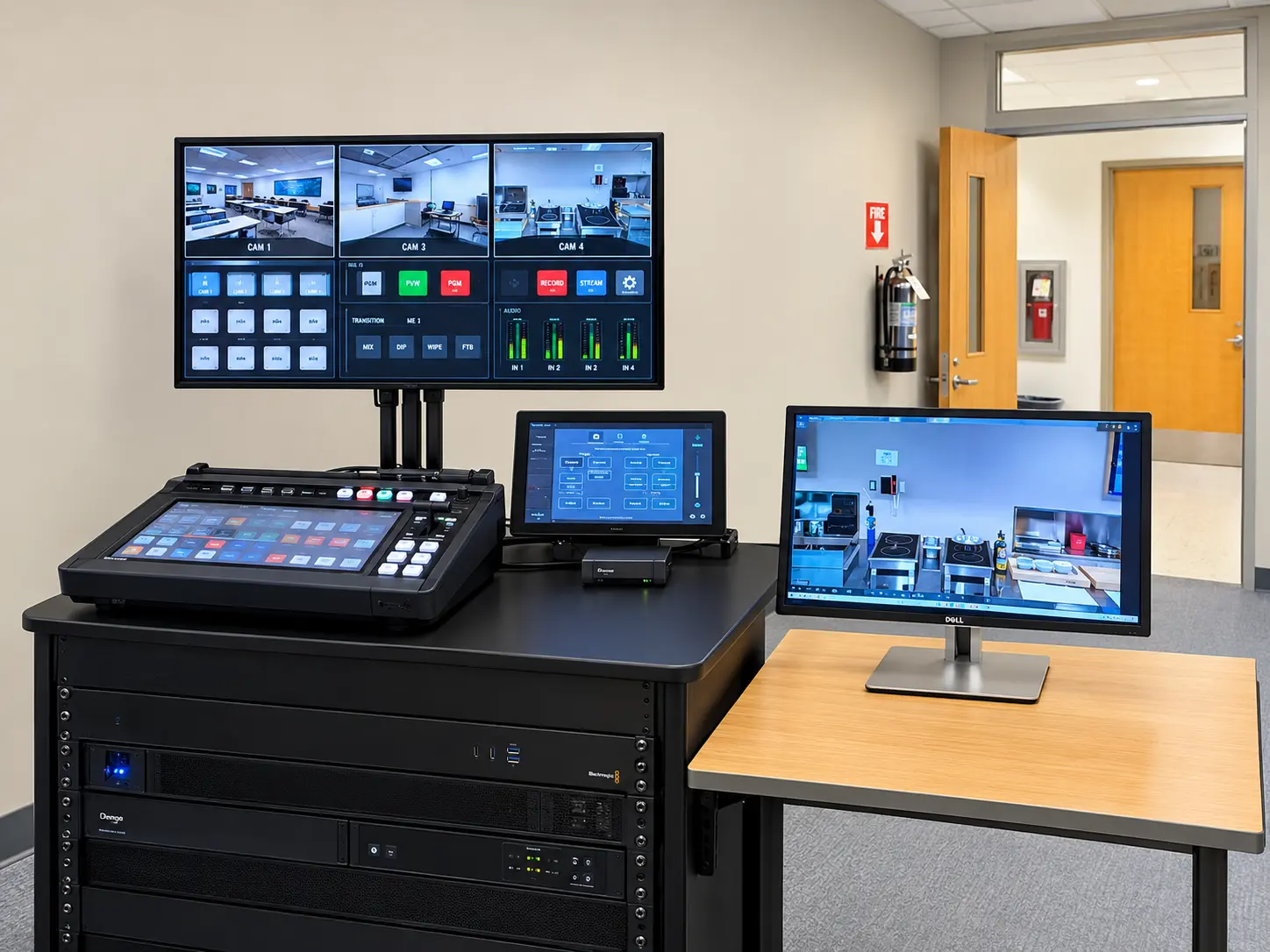
Portable video and audio production system featuring multi-camera production, video-over-IP, HDMI switching, wireless microphones, digital audio mixing, and a mobile rack for flexible campus-wide events and instruction.
Visual Sound also provided a portable video and audio production system that can be deployed throughout the campus. The system includes a three-camera production package, video-over-IP encoders and decoders, HDMI switching, a portable monitor, powered loudspeakers, wireless microphones, a 16-channel digital mixing console, Bluetooth connectivity, and a portable rack system.
This mobile production capability gives DCCC the flexibility to support special events, instructional recording, presentations, and other campus activities without relying solely on permanently installed systems.
A Connected Technology Environment
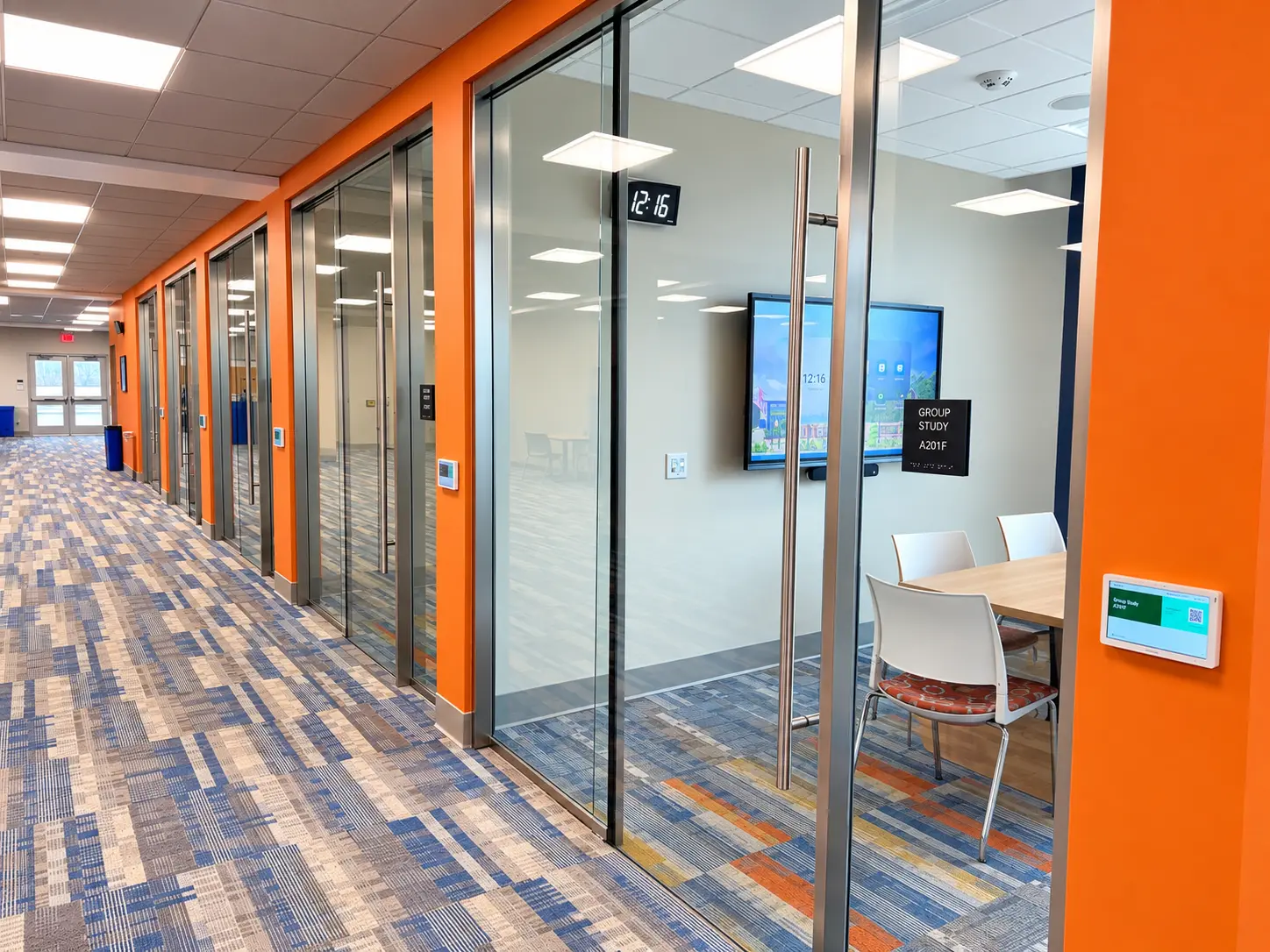
AV technology-enabled group study rooms with displays, room scheduling panels, and integrated collaboration tools designed for flexible student learning.
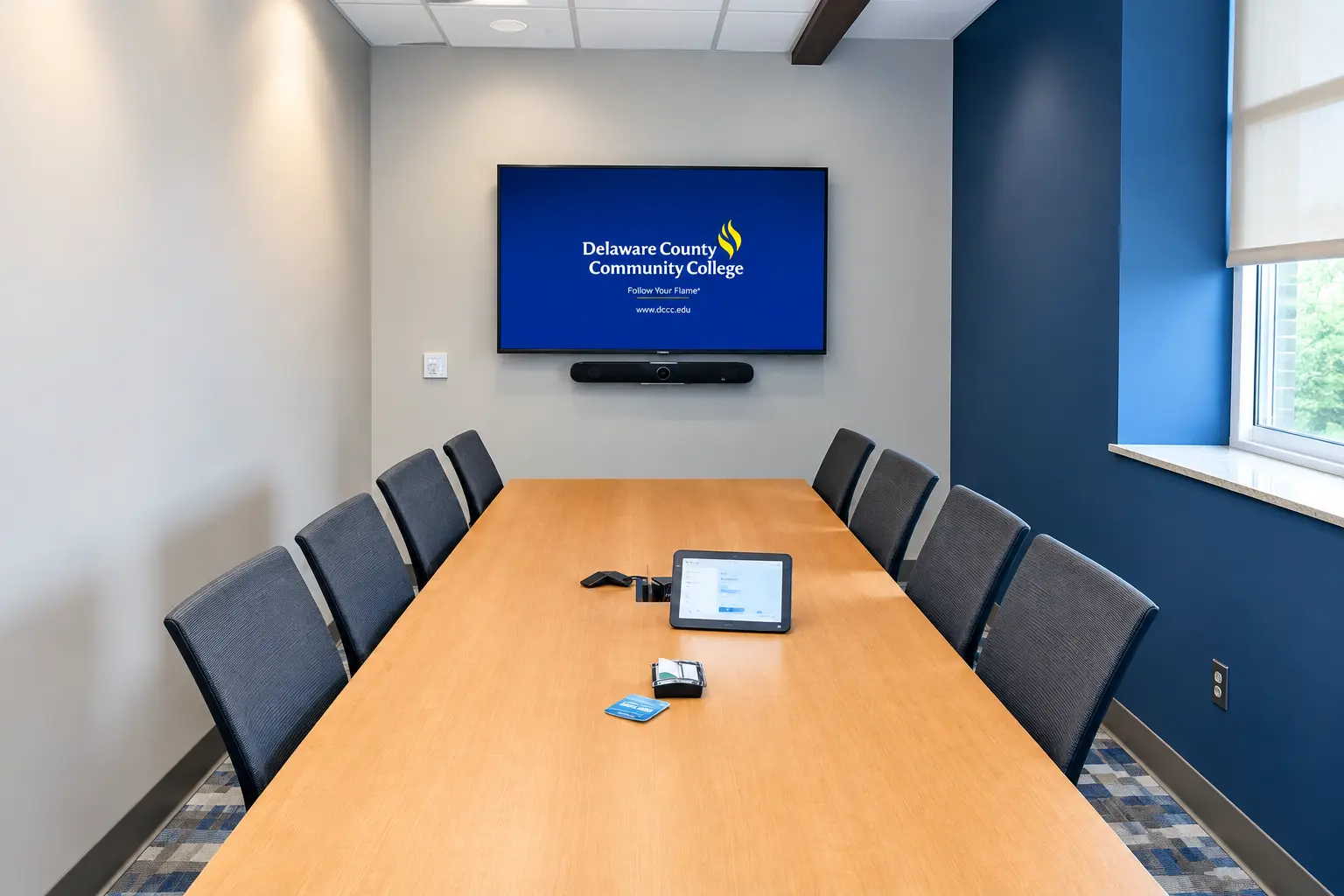

Left: AV for DCCC’s meeting rooms are designed for seamless collaboration.
Right: Digital signage helps students, visitors, and faculty stay informed with activity and event information, while building the DCCC brand.
Digital signage and network-based AV further extend the technology experience throughout the building, including 65-inch Clear Touch displays and DigitalLinxIP video decoders for standalone marketing displays, allowing content to be distributed to multiple locations across the facility.
The result is a cohesive technology environment that supports instruction, collaboration, communication, recording, and student engagement across a diverse range of spaces.
The Result
Expanding DCCC’s Capabilities. Preparing Students for High-Priority Careers.
The Southeast Center represents a significant investment in the future of higher education and workforce development in Delaware County, PA. DCCC designed the higher education facility to expand access to high-priority career programs and provide students with modern environments where they can build practical, job-ready skills.
From individual culinary workstations and demonstration kitchens to technology-enabled classrooms, observation spaces, digital signage, and portable production, Visual Sound’s Audio Visual systems integration and support expertise helps bring that vision to life.
By combining intuitive AV control, instructional video, professional audio, presentation technology, and flexible production capabilities, Visual Sound helped create a technology environment where the focus stays where it belongs: on teaching, learning, and preparing well-qualified students for the region’s growing industries.
Credits:
Architect: MAROTTA/MAIN Architects